info@hongwing.com
Excavator Mulcher
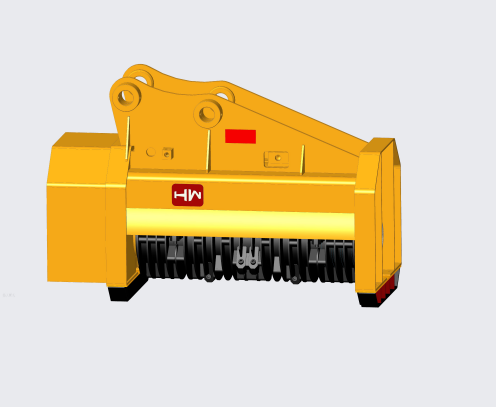
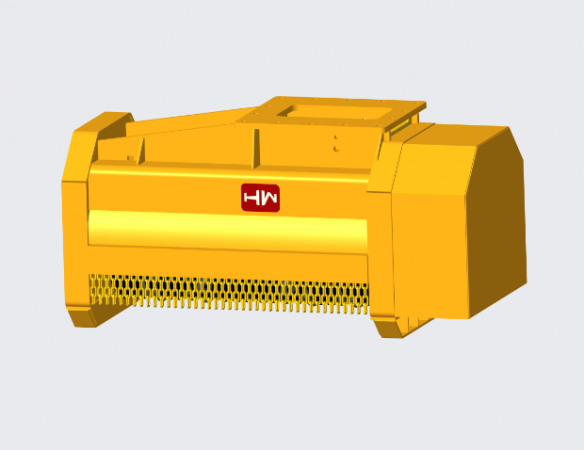
excavator mulcher is a powerful hydraulic attachment mounted on the arm of an excavator. It is specifically designed for land clearing, vegetation management, and forestry applications.
Function:
Its primary purpose is to efficiently cut, shred, and mulch trees, brush, undergrowth, and other woody vegetation into small chips. Unlike traditional methods involving chainsaws, burning, or hauling away debris, a mulcher processes material on-site.
Key Components & Operation:
Drum or Disc: The core component, equipped with dozens of hardened steel cutting teeth (carbide-tipped or fixed).
Hydraulic Drive: Powered by the excavator's hydraulic system, it spins the drum at high torque and speed.
Cutting Action: As the rotating drum contacts vegetation, the teeth shear, chip, and shred it into a layer of mulch.
Frame & Housing: A robust structure protects the excavator and components, and often helps contain and direct the ejected mulch.
Primary Applications:
Land Clearing: Preparing sites for construction, agriculture, or right-of-ways (pipelines, power lines).
Forestry Management: Thinning forests, creating firebreaks, clearing logging debris, and managing invasive species.
Right-of-Way Maintenance: Maintaining clearances along roadsides, railways, and utility corridors.
Wildfire Prevention & Fuel Reduction: Reducing combustible ground fuel loads.
Pasture & Habitat Restoration: Clearing overgrown areas to promote grassland or specific plant regrowth.
Major Advantages:
Efficiency: Processes vegetation rapidly, handling trees up to a certain diameter (size capability depends on the mulcher model and excavator size).
Cost-Effective: Eliminates multiple steps (felling, hauling, burning) and reduces overall project time and labor.
Environmental Benefits: On-site mulching returns organic matter to the soil, acting as a natural erosion barrier, moisture retainer, and nutrient supplement. It avoids burning emissions.
Versatility: An excavator's reach and mobility allow for work on steep slopes, uneven terrain, and sensitive areas where dedicated forestry machines cannot easily operate.
Safety: Allows operators to clear vegetation from a secure cab position, often at a distance from hazardous trees or debris.
Add High-tech Industrial Development Zone (Fuda District), Meizhou, Guangdong, China.
Tel 86-753-2514818-821 / 86-753-2514818-816
Fax 86-753-2514810
Email info@hongwing.com
Postcode 514799

 Excavator Attachments
 Loader Attachments
 Special Attachments
 NEW Products